
 Ahmed Khan
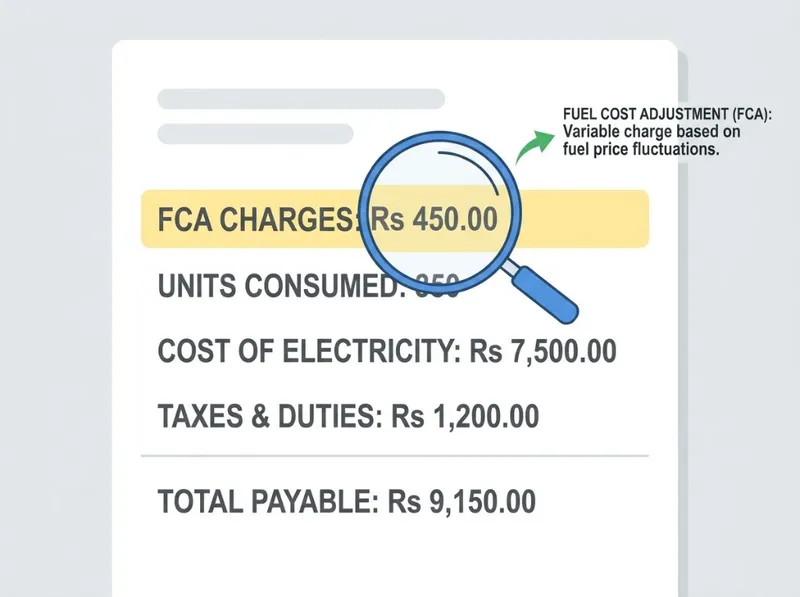
Every month, Pakistan's power distributors add or subtract a small charge called the fuel cost adjustment. In August 2026, it pushed bills up by roughly Rs1.20 per unit. Most consumers see this line item and move on without knowing why it exists or how it is calculated.
This article explains how FCA works, what separates it from the quarterly tariff adjustment, who is exempt, and how to read it on your own bill using current public billing terminology.
tips_and_updates Quick takeaway
FCA is a monthly pass-through for fuel cost gaps — not a penalty. It can raise or lower your bill depending on the actual generation mix that month.
What is Fuel Cost Adjustment (FCA) in Electricity Bills?
Fuel cost adjustment is a variable charge added to or subtracted from your electricity bill every month. It exists because the base tariff uses an estimated fuel cost, while actual generation costs change depending on the fuel mix used that month.
When real costs run higher than the estimate, NEPRA can approve a positive FCA and your bill goes up. When costs are lower, the adjustment can show as a credit.
Why Does Pakistan Use a Fuel Cost Adjustment Mechanism?
Pakistan's power generation relies on a fuel mix that changes often, so a fixed annual tariff would leave either consumers or the power sector absorbing sudden cost shocks. FCA helps adjust for those changes on a monthly basis.
How Fuel Cost Adjustment Is Calculated
The basic idea is simple: compare the reference fuel cost with the actual fuel cost and apply the difference to the units consumed. CPPA-G prepares the data and NEPRA reviews it before it appears on bills.
The final number can also include transmission losses and other approved cost components, so the line item is more than a basic fuel-price calculation.
The Reference Fuel Cost vs Actual Fuel Cost Formula
Every month, NEPRA sets a reference fuel cost per unit. If the actual fuel cost comes in higher, the difference becomes FCA. If it comes in lower, consumers may receive a negative adjustment.
Who Sets the Reference Fuel Cost?
The Central Power Purchasing Agency (CPPA-G) calculates and submits the numbers, and NEPRA reviews them publicly before approval.
Monthly FCA vs Quarterly Tariff Adjustment
Consumers often confuse FCA with quarterly tariff adjustment. FCA reflects monthly fuel-price swings, while quarterly adjustments cover broader cost categories reviewed every three months.
| Aspect | Monthly FCA | Quarterly Tariff Adjustment |
|---|---|---|
| Review Frequency | Every month | Every three months |
| Covers | Fuel price swings only | Capacity, transmission, and structural costs |
| Volatility | High | Lower |
| Approved By | NEPRA | NEPRA |
What Factors Drive FCA Up or Down
FCA moves with the fuel mix. Cheaper hydel or nuclear generation can reduce it, while expensive furnace oil or imported LNG can push it up. Currency weakness can also make imported fuel cost more in rupee terms.
Positive vs Negative FCA
A positive FCA means actual fuel costs were higher than planned, so consumers pay extra. A negative FCA means the system over-collected earlier and now issues a credit.
Who Is Exempt from Fuel Cost Adjustment?
Lifeline and protected consumers may be shielded from FCA charges under current policy thresholds. These rules can change, so users should check the latest bill category details if they think they may qualify.
How to Check FCA on Your Electricity Bill
Your bill usually lists FCA as a separate line item. Compare it with NEPRA's monthly notification if you want to verify the approved rate.
FAQ
What is electricity fuel cost adjustment in Pakistan? expand_more
It is a monthly charge that reflects the gap between the expected fuel cost and the actual cost of generating electricity.
How often does NEPRA review FCA? expand_more
NEPRA reviews FCA requests monthly after CPPA-G submits the figures.
Can FCA reduce my bill? expand_more
Yes. If actual fuel costs are lower than the reference estimate, the adjustment can become a credit.
Fuel cost adjustment is not a hidden fee. It is a monthly reflection of what Pakistan's power sector actually paid to keep the lights on. The most important thing to remember is that FCA can rise or fall depending on the fuel mix, currency swings, and global energy prices.